Do not open Air Gradia 452
Station ElevenDo not open Air Gradia 452 is an unspoken rule at Severn City Airport: the sealed plane is kept untouched, and its presence is largely kept out of conversation. The rule protects the airport from a feared danger, but also makes the aircraft a physical reminder of the dead and of the survivors’ unresolved choice to leave them inside.
The Rule and Its Reasons
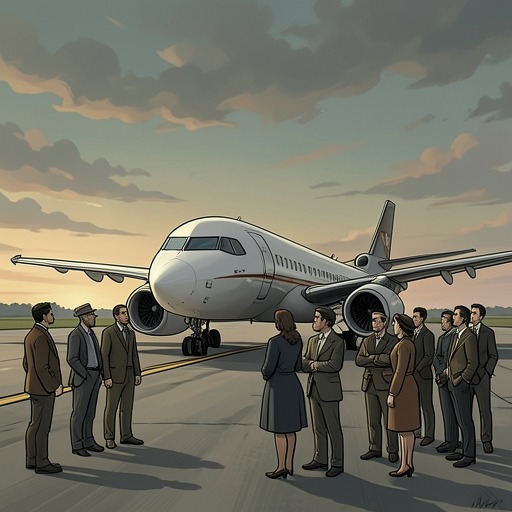
The plane sits silent near the airport’s perimeter fence. Clark Thompson tries not to look at it and sometimes persuades himself that it is empty, like the other aircraft outside. The survivors have kept it sealed rather than risk exposing a packed airport to a potentially fatal contagion; they do not know whether the virus can be contracted from the dead. In Clark’s thoughts, the aircraft is at once a possible source of infection and a mausoleum.
The rule is enforced partly through silence. Clark describes the decision as something no one wants to think about, and the plane is never discussed by unspoken agreement. His private effort not to recall the decision, what enforcing it may have required, or the passengers’ final hours shows that keeping the doors closed does not make the choice emotionally disappear.
A Forbidden Approach
A few months before Elizabeth Colton and Tyler Leander leave the airport, Clark sees a child near the plane while breaking sticks for kindling. The aircraft is strictly off-limits, but he discovers Tyler standing by its nose with a paperback, reading aloud toward the dark windows. Tyler explains, “I’m reading to the people inside.” Clark answers, “There’s no one in there.” Yet the narration recognizes the contradiction: of course there is. The sealed plane is not empty, even if its occupants cannot be seen.
Tyler reads a passage about plagues, death, mourning, famine, and judgment. He says that he wants the people inside to know that what happened was for a reason. Clark counters that some things simply happen. Their exchange brings the rule’s unspoken moral tension into the open: Tyler addresses the dead as an audience, while Clark resists turning their deaths into a providential explanation.
Memory and Consequence
The aircraft remains closed, but its meaning recurs in the survivors’ lives. Clark trains himself not to think about it and to avert his gaze; he even tries to convince himself that it contains no one. The effort is a form of self-protection, not proof that the past has been settled. His memory of Tyler at the plane makes the silence harder to sustain, revealing a child testing the boundary through reading and an adult unable to accept the meaning Tyler assigns to the catastrophe.
The rule therefore preserves both physical separation and an unresolved burden. Its practical basis is uncertainty about contagion, while its human cost lies in the deliberate containment of the dead and the decision’s haunting presence among the living. The book does not show the plane being opened; it leaves the survivors’ choice sealed alongside its passengers.